Infographics

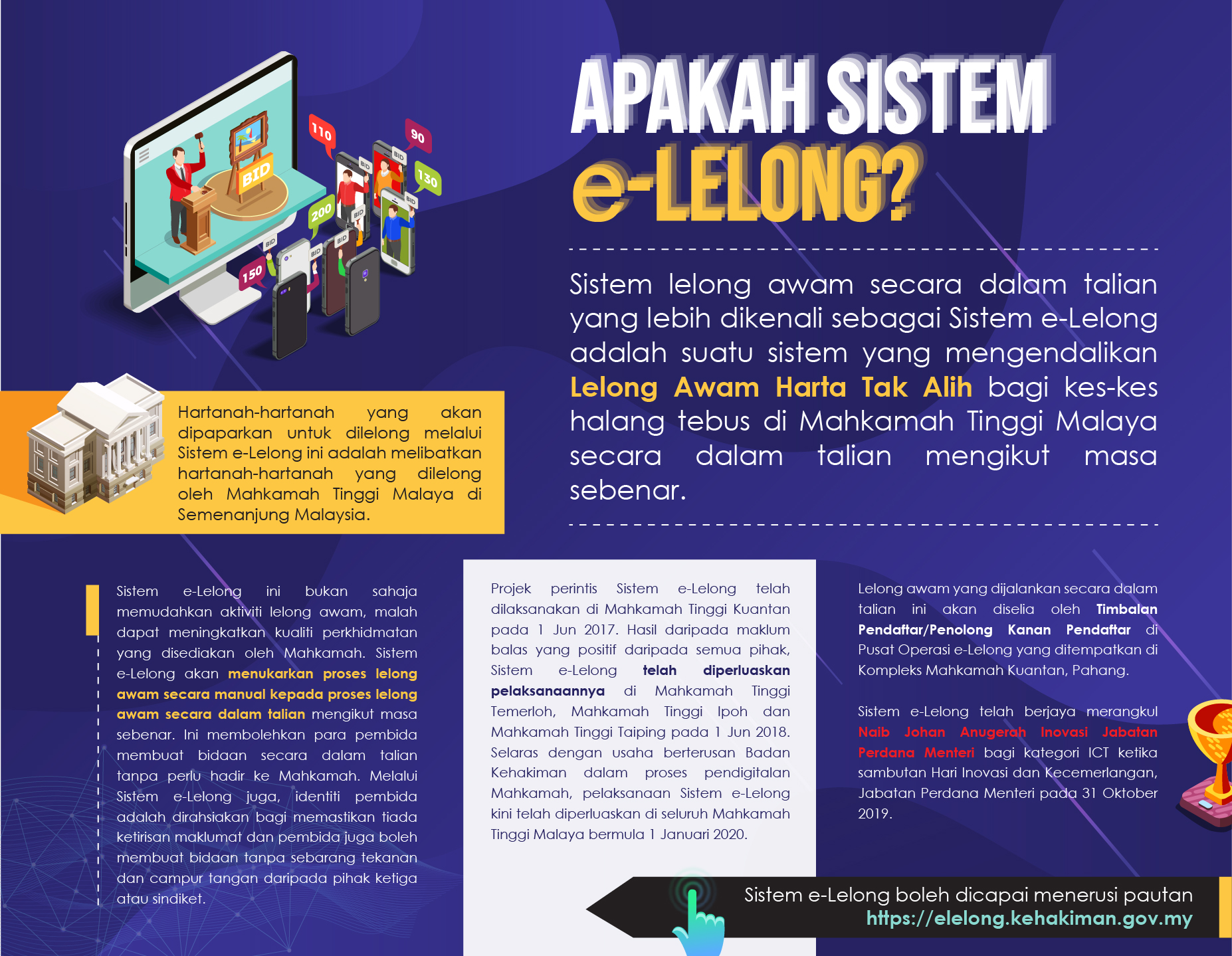
Apa itu E-Lelong? muaturun
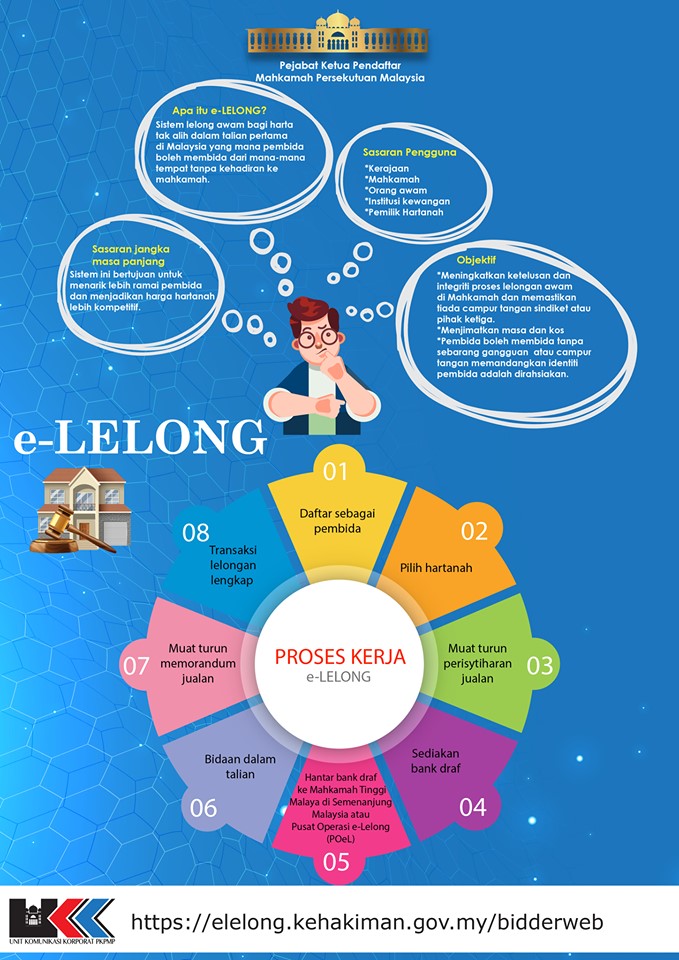
Proses Kerja e-Lelong muaturun
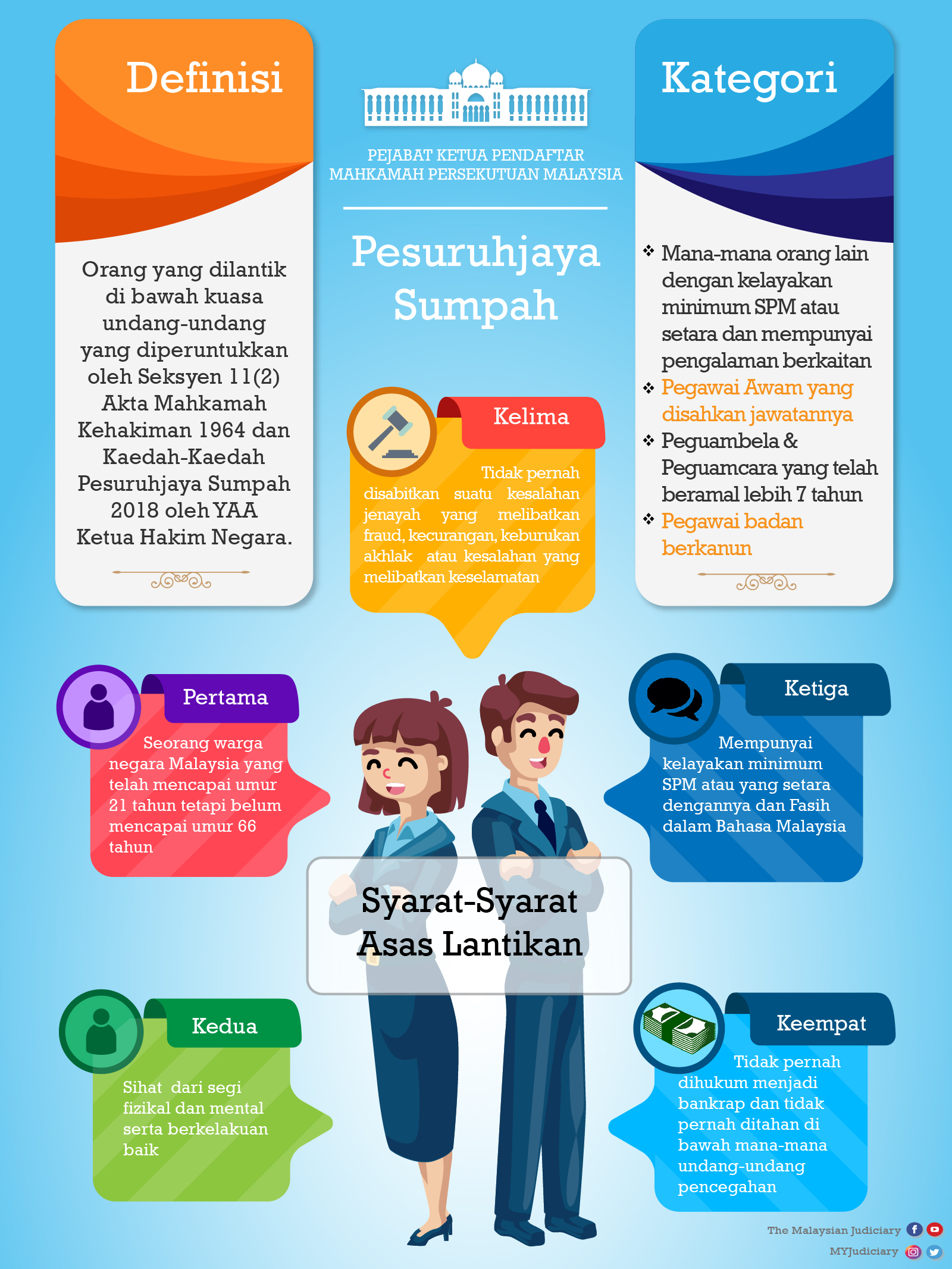
Pesuruhjaya Sumpah dan Syarat-Syarat Pelantikannya muaturun
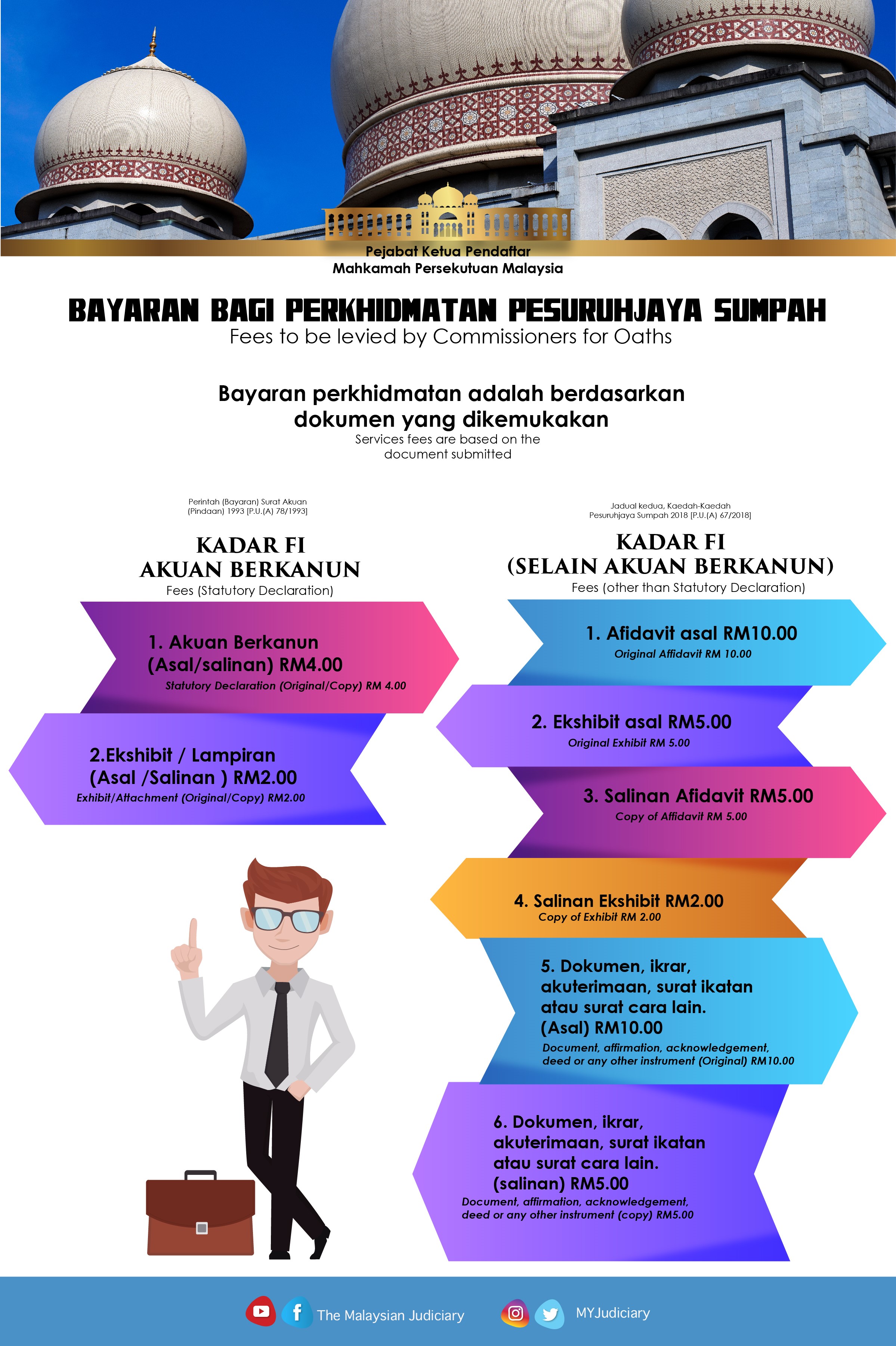
Bayaran bagi Perkhidmatan Pesuruhjaya Sumpah muaturun
Mewakili Diri Sendiri di dalam Prosiding Jenayah muaturun
Pelaksanaan Sistem e-Appellate muaturun
Sistem Imbasan QR Code Bagi Pengesahan Ketulenan Dokumen Mahkamah di Semenanjung Malaysia muaturun
Carta Alir Tatacara Pengendalian Prosiding Kes Saman Trafik Melalui Teknologi Komunikasi Jarak Jauh muaturun
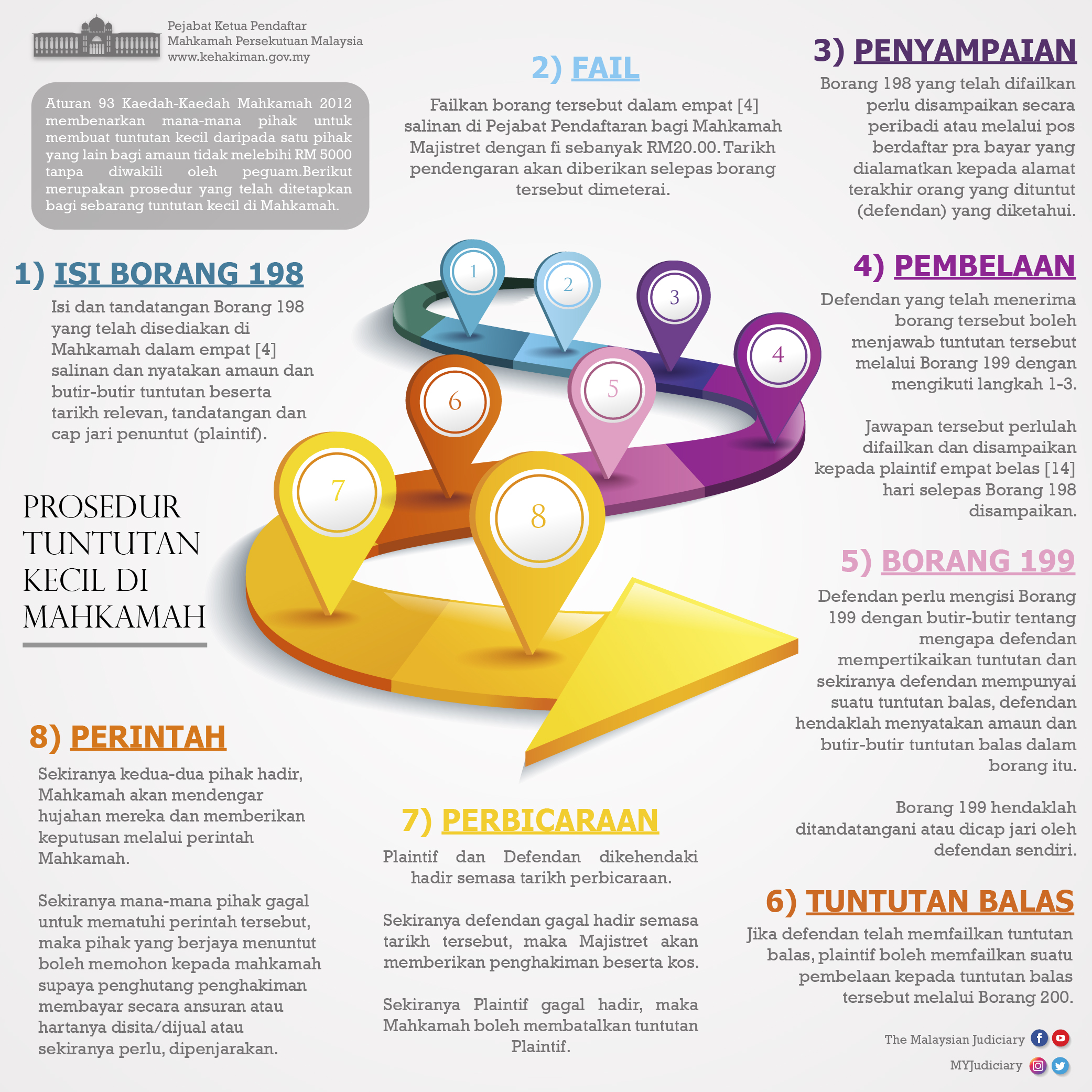
Prosedur Tuntutan Kecil di Mahkamah muaturun
Prosedur Pengendalian Mediasi muaturun
Prosedur Pengendalian Persidangan Mahkamah Secara Sidang Video bagi Mahkamah Sabah dan Sarawak untuk Pemegang-Pemegang Taruh (Stakeholders) muaturun
Tatacara Operasi Standard Pencegahan Wabak COVID-19 di Mahkamah Seluruh Malaysia Bagi Pengguna muaturun
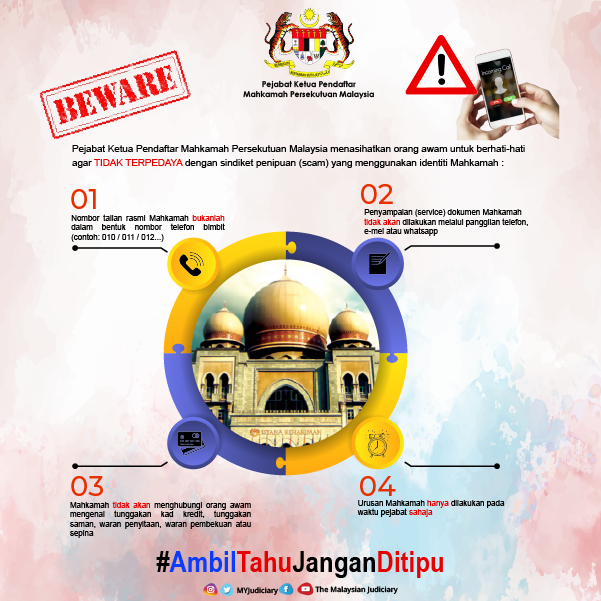
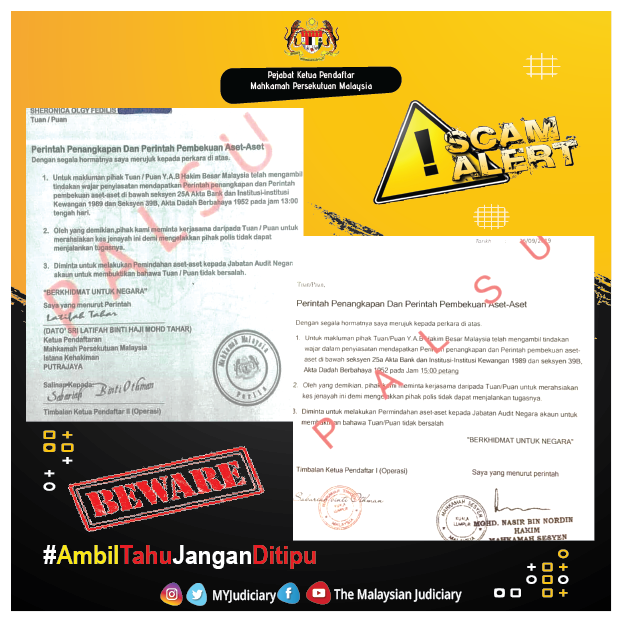
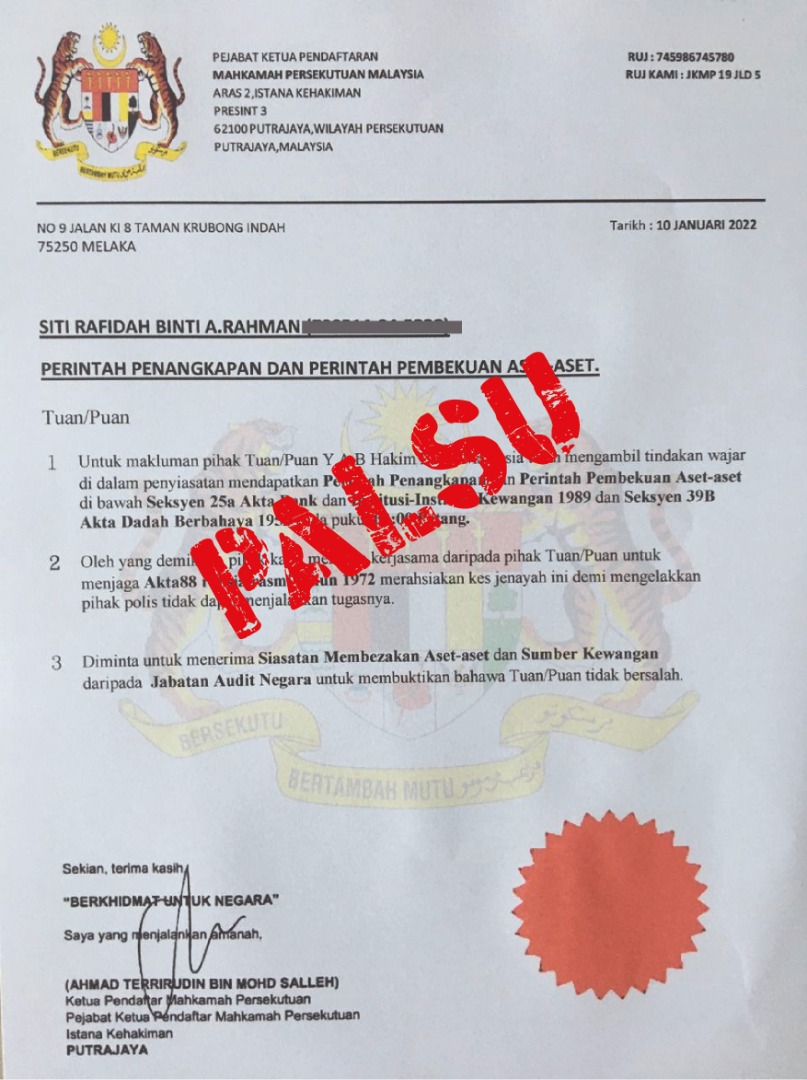
Scam Alert 1 muaturun
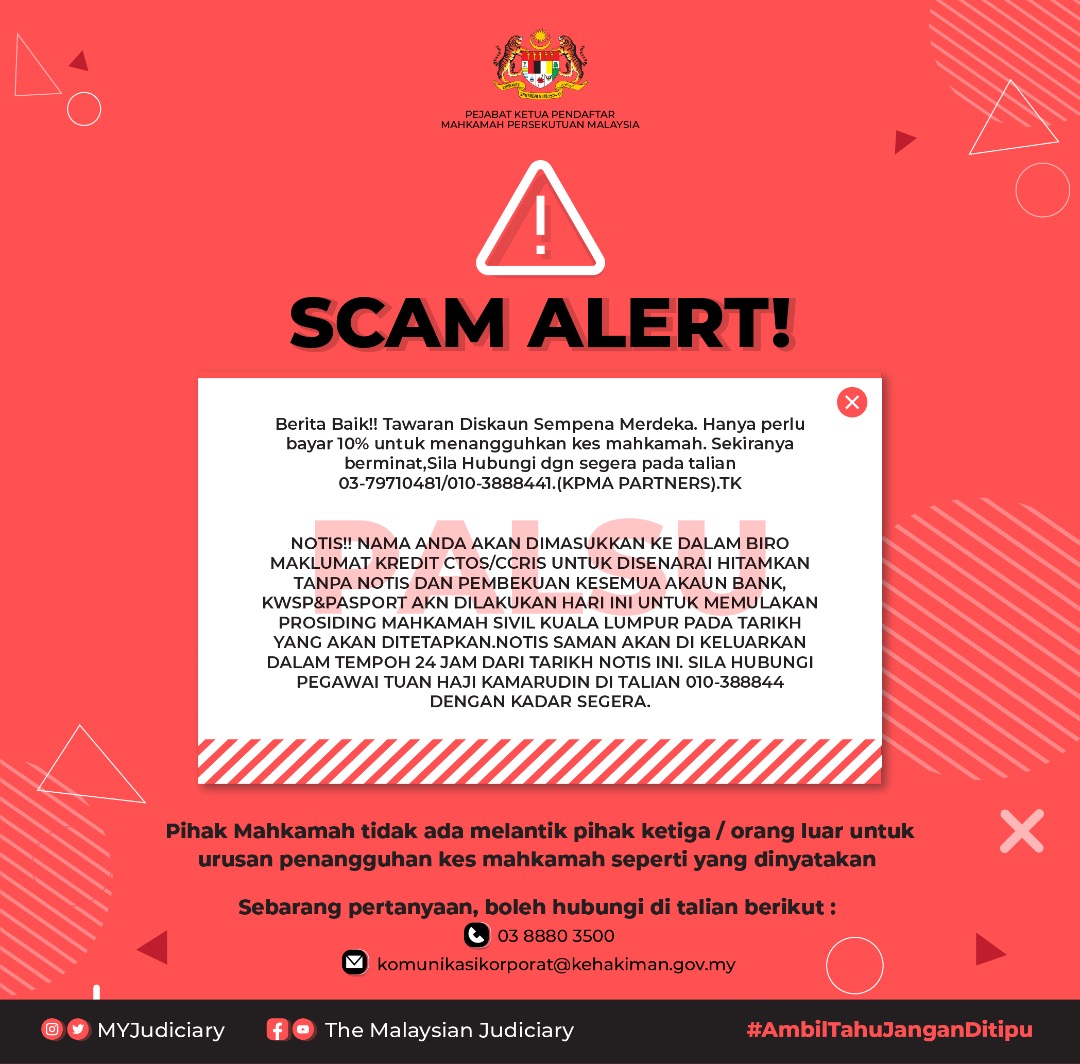
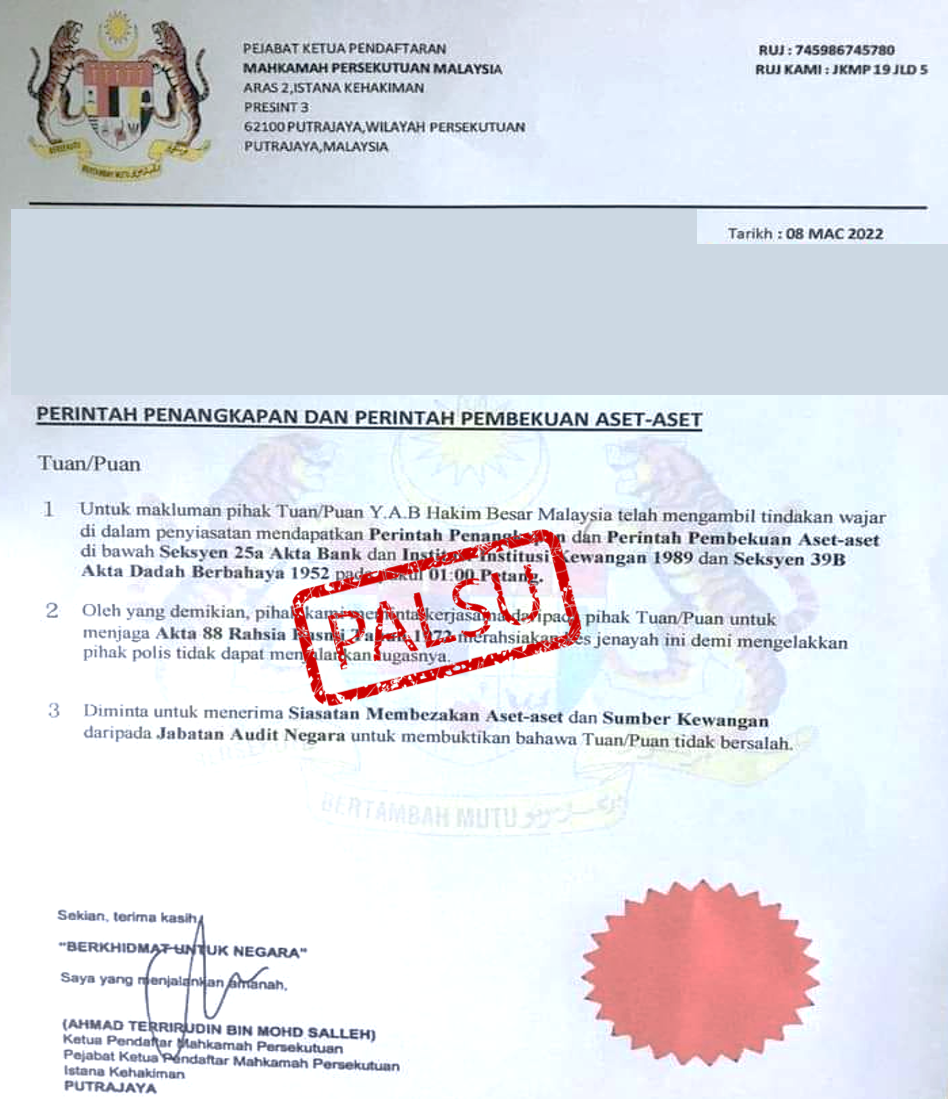
Scam Alert 2 muaturun
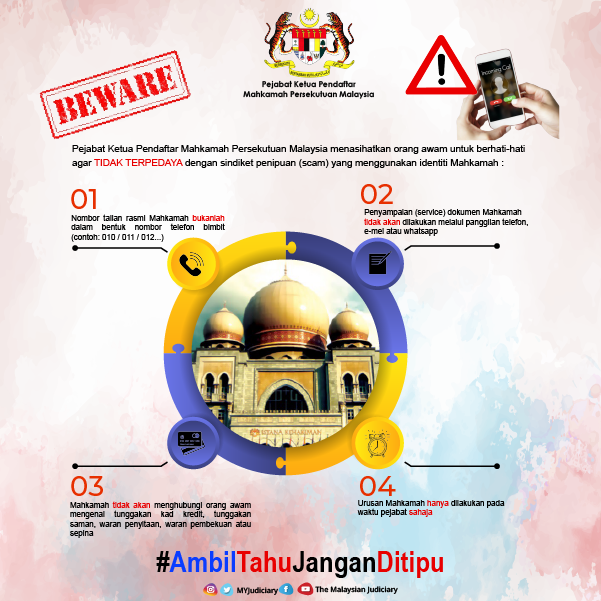
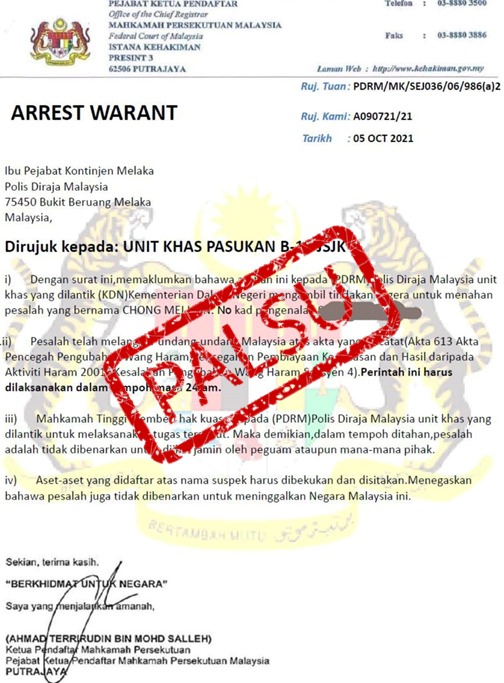
Scam Alert 3 muaturun
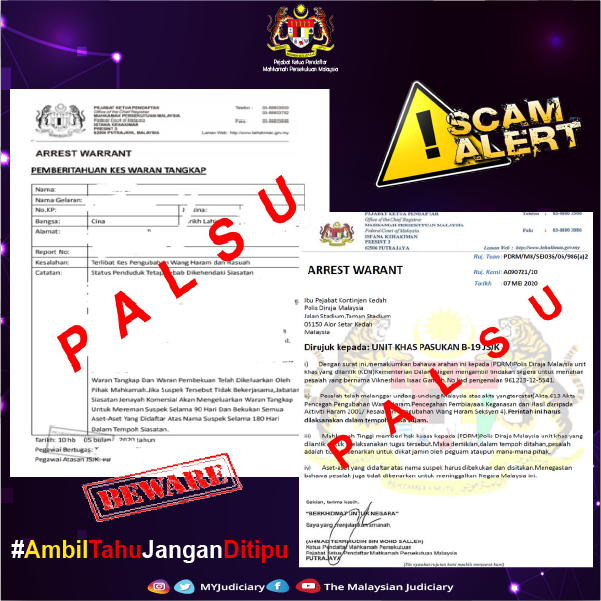
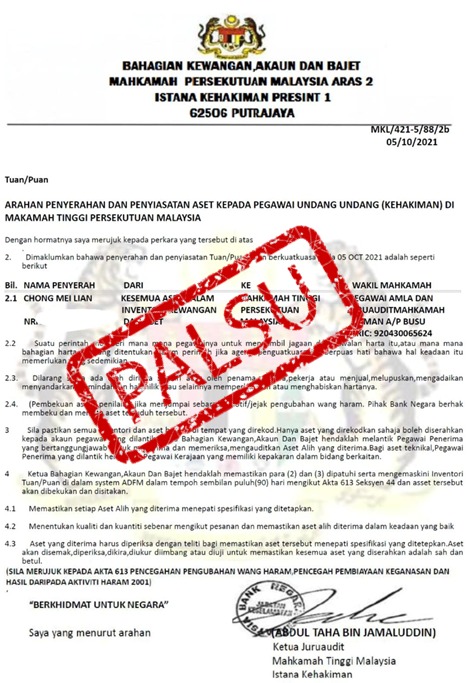
Scam Alert 4 muaturun
Scam Alert 5 muaturun

Scam Alert 6

muaturun

Scam Alert 7

muaturun

Scam Alert 8

muaturun

Scam Alert 9

muaturun

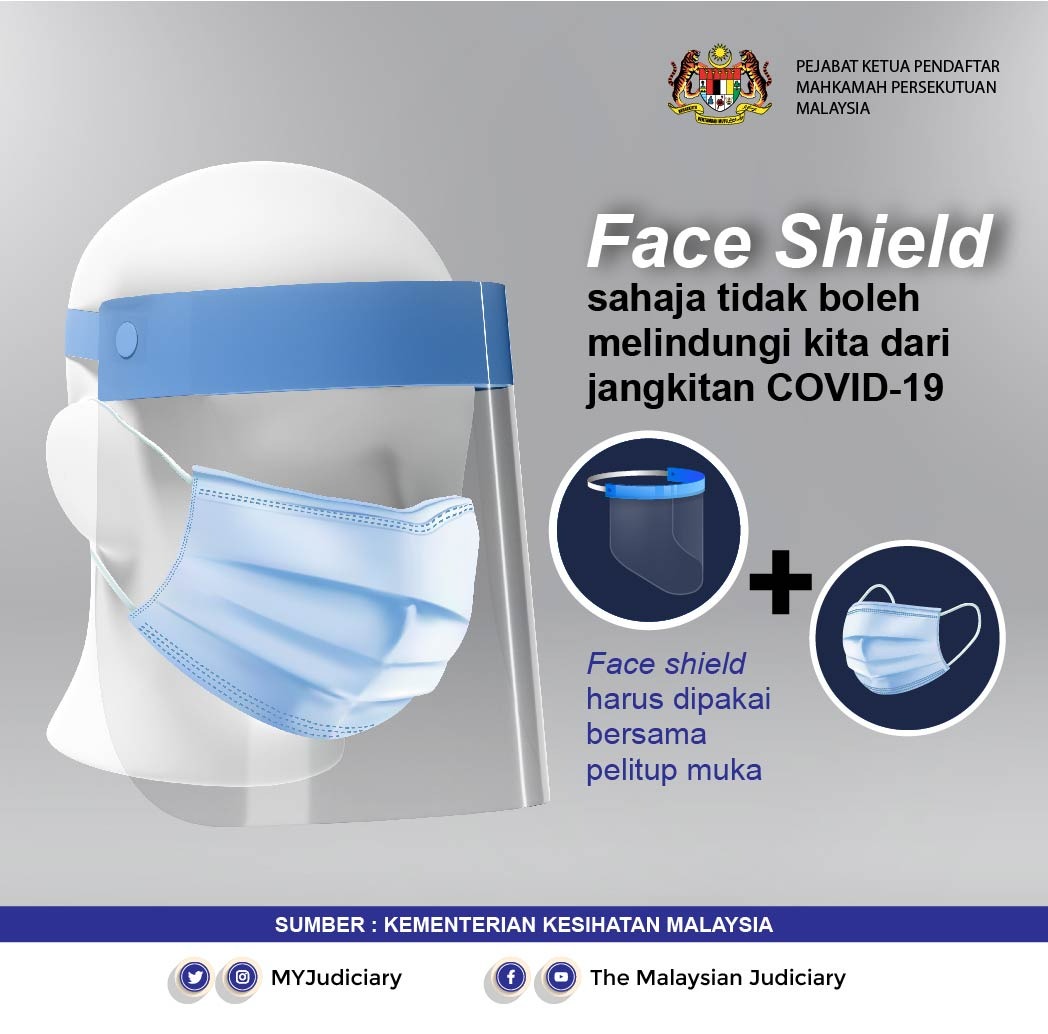
Pemakaian Pelindung Muka

muaturun

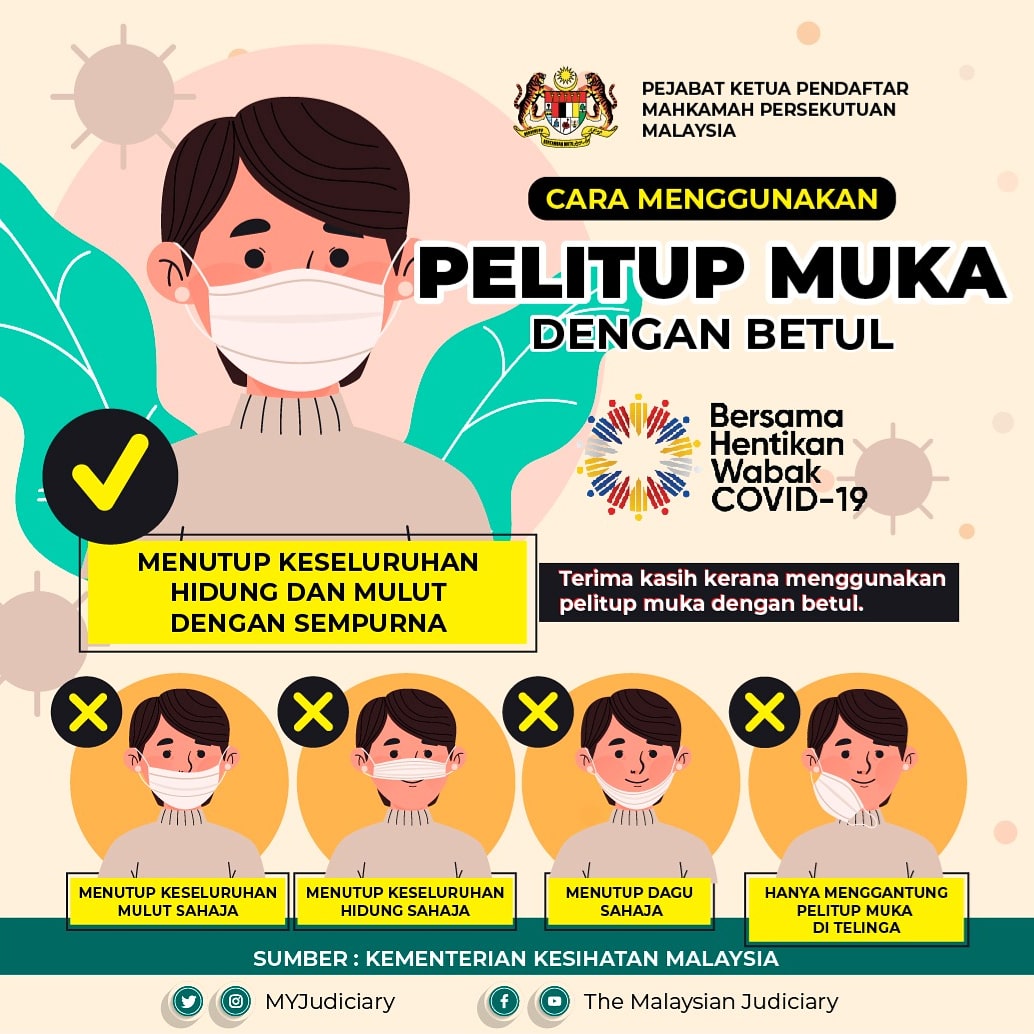
Cara Menggunakan Pelitup Muka Dengan Betul

muaturun
Ikat Jamin muaturun
Mewakli Diri Sendiri Semasa Perbicaraan muaturun

Information Technology Division

INTRODUCTION

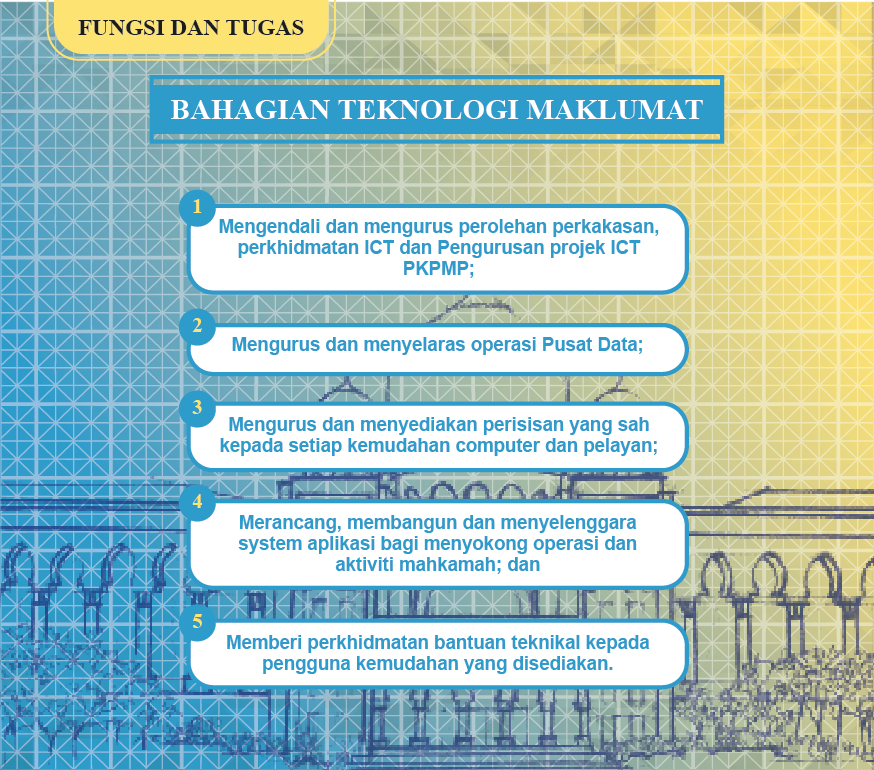
The Information Technology Division is responsible to manage the application of the Information Technology for the Chief Registrar’s Office of Federal Court Malaysia. This Division is led by a Director who is assisted by a Deputy Director, several Assistant Directors, and several Information Technology Officers. This Division comprises of several units; Administration & Finance, Asset Unit, Application Unit, e-Mail Unit, e-Court Unit, Network Unit and CRT & Portal Unit. This Division is placed directly under the supervision of the Office of Deputy Chief Registrar II (Operations). This Unit is to perform a vital role in the management and monitoring of networks, applications, hardware, system software and technical services used by all courts throughout Malaysia.

Integrity Unit

INTRODUCTION

Integrity Unit, the Office of Chief Registrar, Federal Court Malaysia is established pursuant to the government’s decision to establish Integrity Unit as a focal point to manage issues in relation to integrity in all government department as stated in Service Circular No. 6 of 2013 (SC6/2013) ‘Establishment of Integrity Unit at all Public Agencies’ with effect from 1 August 2013.

This Unit is led by a Unit Head and assisted by an Administrative & Diplomatic Officer and a senior assistant Registrar. This Unit is directly under the supervision of the Chief Registrar of Federal Court Malaysia.

Johor Court History

The judicial system in Johor Bahru started with the Police Court based on the Johore Police Code 1873. The Supreme Court was established in 1883. A scholar (ulama), Haji Muhamad Salleh was appointed as a Judge assisted by the Mufti Government Syed Salim al-Attas, as an Islamic Legal Adviser. The daily administration of the Court was carried out by Mubin Ibrahim as the Registrar of the Court, as well as several clerks and a Chinese interpreter named Eoo Joo Guan.


Following the influx of labourers from India, in 1888 the government hired Tambi Sabr Ali as a Tamil Interpreter. It is believed that books of Syarak Law were used as a guide for Judges following the Law of Justice in Johore was based on Islamic Laws such as the Kitab Perhimpunan Hukum-hukum Syarak al-Islam. The judicial system in Johore until 1911 was run by native (Bumiputera) officials while British officials, especially Legal Advisers, were gazetted as High Court Judges to hear cases involving only Europeans.


In accordance with Islam as the state religion, the Chief Judge is Datuk Haji Abdullah Musa, who was also the Mufti of Johore. In fact, the former Johore Kadi Assistant, Ungku Omar Ahmad was appointed as a Magistrate in Endau alongside his duties as Deputy Commissioner of the Endau Government. During the reign of Sultan Ibrahim, Majallah Al-Ahkam Al-'Adliyyah implemented by the Turkish Ottoman Empire in the 19th century was translated into Malay. The code is better known as Majalah Ahkam Johor and was used as an official guide for Syariah law in Johore in 1913.

Civil Courts in Malaysia are generally divided into types in accordance with the law of their establishment. For instance, the Subordinate Courts Act 1948 governs the establishment of Magistrates' Courts and Sessions Courts. While the Courts of Judicature Act 1964 provides the establishment of the High Court, the Court of Appeal and the Federal Court. This division of Courts is because each Court is subject to its own jurisdiction.


The structure of the Malaysian Judiciary is divided into two parts i.e. the Superior Courts and the Subordinate Courts. The highest court in Malaysia is known as the Federal Court, followed by the Court of Appeal and the High Court consisting of both the High Court in Malaya and High Court in Sabah and Sarawak. The Subordinate Courts consist of the Sessions Courts and the Magistrates’ Courts. The Special Court was established through the Federal Constitution on 20th March 1993 and has jurisdiction to try civil or criminal actions initiated by or against His Majesty the Yang di-Pertuan Agong or other Malay Rulers.


In relation to proceedings, each Court has its own proceedings and is supervised through their respective rules. Procedures of criminal trial in the Superior and Subordinate Courts are determined based on the Criminal Procedure Code. In August 2012, a new rule namely the Rules of Court 2012 was enacted to consolidate the rules relating to proceedings of civil case in the Magistrates’ Court, the Sessions Court and the High Court.


Now, the courts in the state of Johore can be divided into two parts, namely the North Johore Court and the South Johore Court. The North Johore Court consists of several districts in the northern Johore such as Muar, Segamat, Kluang, Tangkak and Batu Pahat. Whereas, the South Johore Court consists of the other districts, namely Johor Bahru, Kota Tinggi, Kulai and Pontian.

Johor State Responsibility Center Division

There are three units under the Johor State Responsibility Center namely the Service/Administration Unit, the Finance Unit and the Procurement and Assets Unit.


Service and Administration Unit

  • Responsible for managing all officer and staff service matters from appointment to retirement. This includes managing leave and service record books for officers and staff of the Johor State Court online through HRMIS. In addition, this unit is also responsible for the management of Training/Courses and Departmental Service Examinations. In addition, this unit is the Discipline and Discipline Secretariat of all groups. Apart from that, this unit is involved in the management of department vehicles, official meetings, and dealing with stamp bookings, meal booking signage and other tasks that are directed from time to time.


Finance Unit

  • Is a unit with the purpose of regulating the finances of the Johor State Court for salary matters, revenue accounts and receiving payments at the counter. In addition, this unit also regulates the accounting work in the 12 Cost Centers of the Johor State Court as well as other tasks that are directed from time to time.


Procurement & Asset Unit

  • Further is the unit responsible for procurement contract matters, security control, cleaning services and toner as well as paper for the entire Johor State Court. In addition, this unit acts as store management as well as registration matters, revaluation and disposal of assets as well as other tasks that are directed from time to time.

Judicial History

Aliran Masa

Sejarah Perkembangan Sistem Kehakiman Di Malaysia

  • 1808
    Mahkamah Agung diperkenalkan selaras dengan Piagam Keadilan Pertama (1807)
  • 1826
    Kehakiman berpusat telah dltubuhkan bagi Negeri-Negeri Selat (Pulau Pinang, Melaka, Singapura) di bawah Piagam Keadilan Kedua.
  • 1855
    Piagam Keadilan Ketiga diperkenalkan bagt memisahkan kehakiman berpusat kepada dua bahagian iaitu:
    (i) Pualu Pinang & Melaka
    (ii) Singapura
  • 1868
    Badan Kehakiman dipisahkan daripada badan eksekutif
  • 1878
    Mahkamah bawahan ditubuhkan:
    (i) Mahkamah Majistret
    (ii) Mahkamah Koroner
  • 1921
    Kes rayuan pertama dari Johor dibawa ke Privy Council
  • 1946
    Ordinan Mohkatah dlperkenalkan dan mahkamah bawahan ditukarkan kepada mahkamah rendah
  • 1957
    Kewujudan Perlembagaan Persekutuaan selaras dengan kemerdekaan Persekutuan Tanah Melayu
  • 1963
    Perlembagaan Persekutuan memberi kuasa kepada hakim-hakim, mengekalkan peruntukan-peruntukan bagi rayuan ke Privy Council tetapi tiada perubahan ketara kepada mahkamah rendah.
  • 1964-1993
    Mahkamah Agung digantikan dengan Mahkamah Persekutuan dan tiga Mahkamah Tinggi yang mempunyai bidang kuasa yang sama. Pada tahun 1965, Singapura keluar dari Malaysia dan seterusnya, mengekalkan Mahkamah Tinggi Malaya dan Mahkarnah Tinggi Borneo.
  • 1994
    Perubahan dalam sistem kehakiman moden.
    (i) Sistem tiga lapisan mahkamah diperkenalkan
    (ii) Proses dua lapisan rayuan diwujudkan
    (iii) Gelaran Lord President ditukarkan kepada Chief Justice (Ketua Hakim negara).
    (iv) Sistem perbicaraan melalui juri dan penilai ditamatkan pada tahun 1995

Judiciary Publication

The International Framework For Court Excellence Malaysia muaturun
Carta Alir Tatacara Pengendalian Prosiding Kes Saman Trafik Melalui Teknologi Komunikasi Jarak Jauh muaturun
1. Shipping Law Conference, Arbitration And The Courts, Lord Clarke Of Stone-Cum-Ebony, 15 September 2011 muaturun
2. Ethics And Civil Procedure, Malaysian Judges, Lord Clarke of Stone-cum-Ebony, 14 September 2011 muaturun
1. ‘Malaysia Court Backlog and Delay Reduction Program: A Progress Report’ muaturun
2. Taklimat di dalam "Power Point" : 'Malaysia Court Backlog and Delay Reduction Program" oleh Tun Zaki Tun Azmi, Mantan Ketua Hakim Negara muaturun
3. Laporan Kemajuan Pelan Antirasuah Nasional (NACP) muaturun